



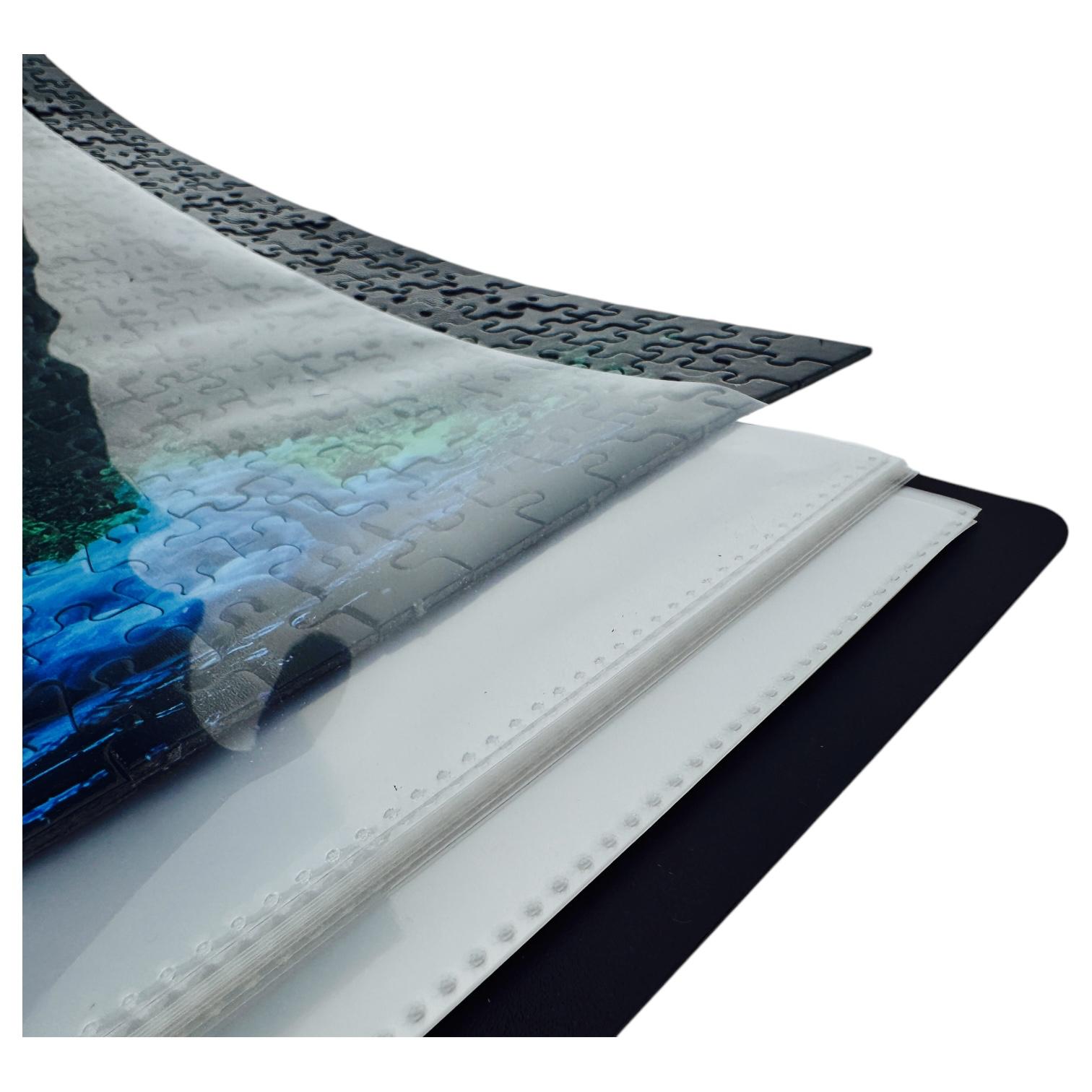
Impossible Puzzle – What’s behind it and which one suits you?
Anyone who has mastered a normal 1,000-piece puzzle and is looking for the next level will sooner or later come across the term “Impossible Puzzle.” But what actually makes a puzzle impossible? And is it really for everyone – or only for die-hard puzzle pros?
In this article, we explain what makes Impossible Puzzles special, which strategies help solve them, and which motifs from our collection at Ulmer Puzzleschmiede are particularly suitable – depending on how brave you are.
What is an Impossible Puzzle?
An Impossible Puzzle is not a separate puzzle type in the technical sense – it’s a category that describes how difficult a motif is to puzzle. The difficulty arises not just from the number of pieces but from the visual characteristics of the motif. An Impossible Puzzle typically has one or more of these features:
Monotonous color areas – Large surfaces in very similar shades where hardly any piece differs from another. A classic example: an almost monochromatic sky, a snowfield, or a dense canopy of leaves.

Repeating patterns – The motif consists of structures that repeat across the entire image, so there are no clear anchor points. Waves, textures, grids, or abstract lines fall into this category.

Missing contours or orientation points – Normal puzzles have corners, edges, and distinctive details. Impossible Puzzles often have few of these or distribute them so evenly that they hardly serve as help.
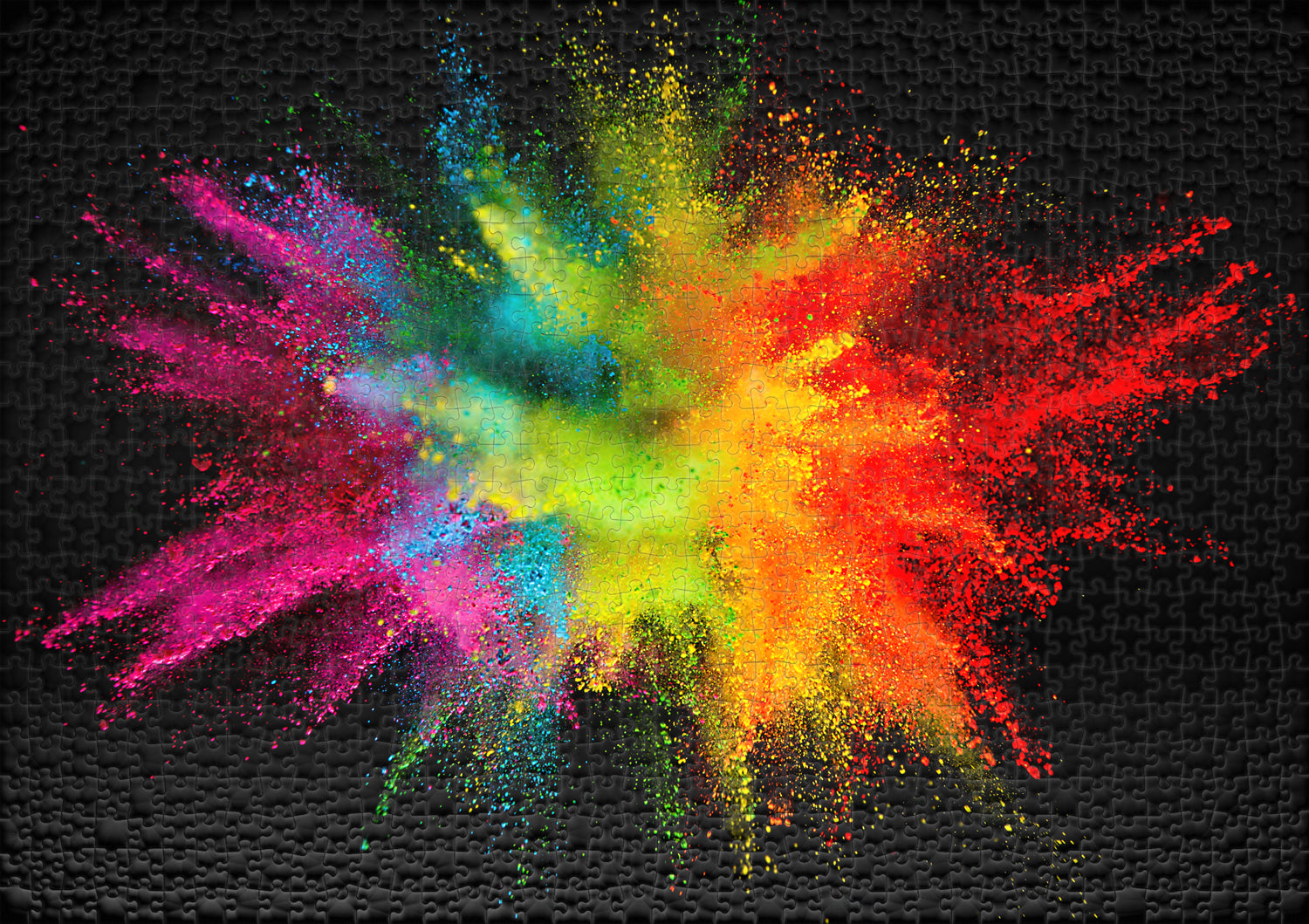
Extreme color contrasts in a small area – The opposite can also be difficult: many different colors in small areas where the pieces hardly differ from each other.

In short: An Impossible Puzzle challenges not only your fingers but especially your patience, concentration, and a good strategy.
Is an Impossible Puzzle really impossible?
No – but it’s a different way of puzzling. Anyone who approaches an Impossible Puzzle like a normal puzzle will quickly get frustrated. The key is to adjust your expectations and approach.
While classic puzzles often start with assembling the frame and then working inward from distinctive details, this approach often doesn’t work with Impossible Puzzles. Instead, the following strategies help:
Sort pieces by shape instead of color. Since color is hardly a reliable guide in Impossible Puzzles, the shape of the pieces is often the only dependable feature. Sort by the number of protrusions and indentations.
Work in small sections. Instead of looking at the entire puzzle, focus on a small area of about 5 x 5 centimeters and work through that area completely.
Lots of light and a neutral surface. Color nuances that appear identical at first glance often differ minimally. Good lighting and a light gray or white surface help make these differences visible.
Plan breaks. This may sound trivial, but it is scientifically proven: after a break, the brain sees patterns and differences that become invisible after staring for a long time.
Don’t put yourself under time pressure. An Impossible Puzzle is not a sprint. If you enjoy it, you can work on it for days or weeks – and that is perfectly fine.
Who are Impossible Puzzles suitable for?
Impossible Puzzles are not intended for beginners – but that doesn’t mean you have to be a competitive puzzler to enjoy them. Those who puzzle regularly, have already completed several 1,000-piece puzzles, and are consciously looking for a greater challenge are well prepared.
They are especially suitable for people who appreciate puzzling as a mindfulness exercise or as a way to achieve deep concentration – because that is exactly what an Impossible Puzzle requires. It forces you to be in the moment, observe details, and think systematically. Many describe the feeling when placing the last piece of a difficult puzzle as exceptionally satisfying – and that is no exaggeration.
Our Impossible Puzzles at Ulmer Puzzleschmiede
In our Impossible Puzzle Collection, you will currently find over 40 designs in the difficulty levels Medium (●●●○○), Hard (●●●●○), and Very Hard (●●●●●). Here is an overview of some particularly distinctive designs:
Entry into difficult terrain – Difficulty level Medium (●●●○○)
If you have no experience with difficult puzzles but want to go beyond the normal level, you’ll find good beginner designs here:
"Dreamcatcher" – A detailed mandala design with delicate structures. Challenging due to the repetition of patterns, but still manageable thanks to the coloring.
"King of the North" – A wolf portrait with strong contrast between dark fur and light background. Challenging, but with clear anchor points.
"Glacier River" – Flowing water and ice in shades of blue. The color variations are subtle but present.
For experienced puzzlers – Difficulty level Hard (●●●●○)
This is where it gets serious. These designs demand true endurance and a clear strategy:
"Gold Veins" – Dark background with finely branched gold lines. The contrasts are strong, but the line pattern repeats in a way that requires real patience. One of our most popular Impossible designs.
"Agave" – Close-up of an agave plant in nearly identical shades of green. If you love leaf textures and have a cool head, this is the right choice.
"Brightly Colored" – The opposite of monochrome: extremely many colors in a very small spaceConfusend auf seine ganz eigene Art.nd auf seine ganz eigene Art.
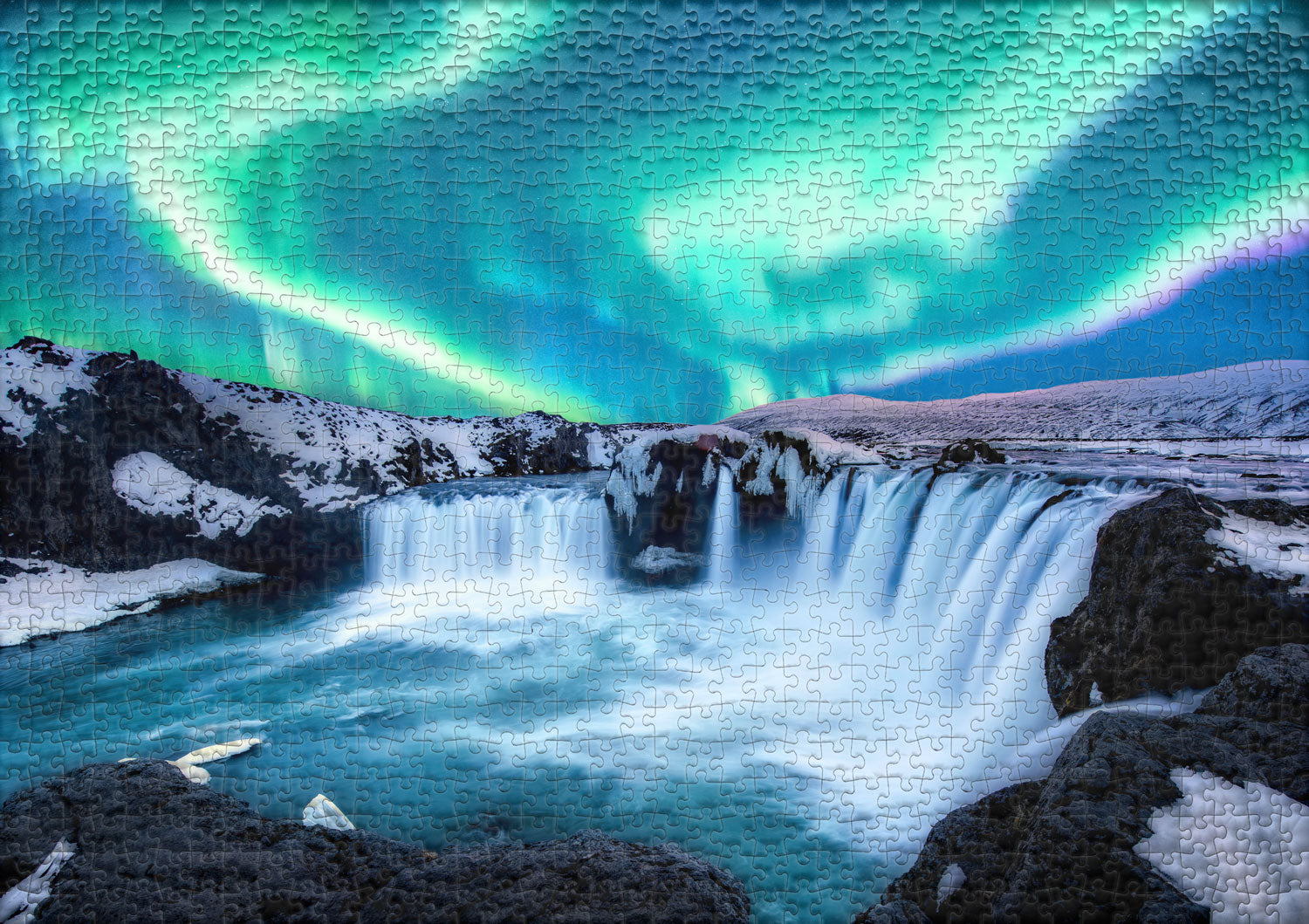
"Ice Waves" – Northern lights over an icy landscape. Dreamily beautiful and at the same time tricky due to the flowing color gradients.
For the hardened – Difficulty level Very Difficult (●●●●●)
These designs represent the maximum of what we offer. Not for the faint-hearted – but the pride after the last piece is priceless:
"Irrwitz" – Nearly monochrome, repeating wave pattern. Hardly any color, hardly any contour, maximum confusion. This is our toughest design.
"Online" – A pattern of light dots and lines reminiscent of a digital surface. High uniformity, minimal differences.
"Wood Chronicle" – Annual rings of a tree in the finest shades of brown. With 6 reviews and consistently positive feedback, one of the most discussed designs in our community.
“Rouge" – A rose motif in deep red tones. Anyone who thinks flower puzzles are easy will be proven wrong here.
“Wirrwarr" – The name says it all. For those who really want to give it their all.
Which Impossible Puzzle suits you?
Not sure where to start? Here’s a simple guide:
You puzzle regularly but have never tried a really hard design → start with “Traumfänger" or “König des Nordens".
You’ve already completed difficult puzzles and want more → “Gold-Adern" or “Agave" are perfect next steps.
Want to find out your limit → “Irrwitz", “Online", or “Holzchronik" will show you.
Looking for a special gift for an experienced puzzler → “Holzchronik" or “Rouge" also make a great visual impression.
You can find all designs in our Impossible Puzzle Collection – each with a difficulty rating so you know what you’re getting into.
Conclusion
Impossible Puzzles aren’t torture – they’re a different kind of enjoyment. Those willing to slow down, think more systematically, and train their concentration will be rewarded with a feeling no ordinary puzzle can offer. The last piece placed in a truly difficult puzzle is one of the most satisfying moments this hobby has to offer.
And if you find yourself cursing what you’ve gotten yourself into along the way – that’s part of it. 😊


Leave a comment