





When Puzzling Brings Calm: Why Spiritual Puzzles Are a Special Form of Me-Time
Do you know this feeling? You scroll through your feed even though you meant to stop long ago. Your head is full, your battery is empty – and yet you reach for your smartphone again.
You’re not alone in this. Many people today spend a large part of their day in front of screens – both professionally and privately. Studies show that digital media claim a significant share of our daily attention.¹ What often remains is a creeping mental exhaustion that is not always immediately noticeable but burdens us in the long term.
You don’t need a wellness vacation or an expensive meditation app to counteract. Sometimes a puzzle, a table, and the willingness to simply be present for a while are enough.
Welcome to a quiet, often underestimated form of deceleration.
Offline as a conscious counterbalance
In an increasingly digital world, many people’s need for analog balancing activities is growing. Studies show that part of the population tries to regulate their screen time more consciously and spend more time offline again.²
Analog hobbies like reading, drawing – or puzzling – are therefore experiencing a new appreciation. Not as a trend in the classic sense, but as a conscious counterbalance to constant input.
What these activities have in common: They demand attention but do not overwhelm.
Why puzzling can have a calming effect
Puzzling is more than just a pastime. It combines several effects that are psychologically relevant:
- Focused Attention: The gaze is directed at a clear, manageable task
- Repetition and Structure: Consistent routines have a calming effect on the nervous system
- Tactile Activity: Working with your hands can reduce stress
- Visual order: from many pieces, a whole gradually emerges step by step
The psychologist Mihály Csíkszentmihályi describes in his flow theory a state of deep concentration where people become fully absorbed in an activity.³ Activities like puzzling can promote this state – especially when they neither overwhelm nor underwhelm.
The result: a calm, clear mind – free from external stimuli.
What makes a puzzle “spiritual”
Not every puzzle triggers the same effect. Besides the activity itself, the motif also plays a role.
Certain images can open additional layers of meaning and deepen the process.
Mandalas – structure and centering
The word “mandala” comes from Sanskrit and means “circle.” In various cultural traditions, mandalas are used as meditation objects to focus attention and organize the mind.
When puzzling a mandala, this effect happens quite practically: from many individual pieces, a symmetrical whole gradually emerges.

The Tree of Life – symbol of connection
The Tree of Life is a cross-cultural symbol. It stands for growth, stability, and the connection between different levels – such as past and future or inside and outside.
Especially in times that many people experience as fast and confusing, this image can have a calming, stabilizing effect.

Calm motifs – visual deceleration
Motifs like Buddha depictions or abstract spiritual symbols often have an effect through their calmness and clarity. They provide visual support and indirectly enhance the decelerating effect of puzzling.
Some people report experiencing a feeling similar to meditation after a certain time spent puzzling – although this varies individually.

A simple ritual for everyday life
Me-time doesn’t have to be elaborate or expensive. What matters is conscious design.
This is what a mindfulness evening ritual can look like:
- Put your smartphone out of reach
- Prepare a tea
- Unpack the puzzle and briefly look at the motif
- Start without time pressure (the motif doesn’t have to be completed in one go, relax and assemble the motif piece by piece every evening)
- Notice how your attention changes
Just 20–30 minutes can be enough to mentally distance yourself from everyday life.
Why such moments are gaining importance
The Future Institute describes mindfulness as one of the defining megatrends of our time.⁴ This does not mean a specific lifestyle, but a growing need for more conscious, self-determined moments in everyday life.
It’s less about big changes – and more about small, recurring actions that help you to relax.
A puzzle can be exactly such a moment: simple, tangible, and free from digital distractions.
An idea for a mindful gift
Especially people who achieve a lot and have little time for themselves often benefit particularly from small breaks.
In this context, a puzzle can be more than just an object – it can be an invitation to consciously take time for yourself. A gift that is more than just a box with many pieces.
If you want to try it out
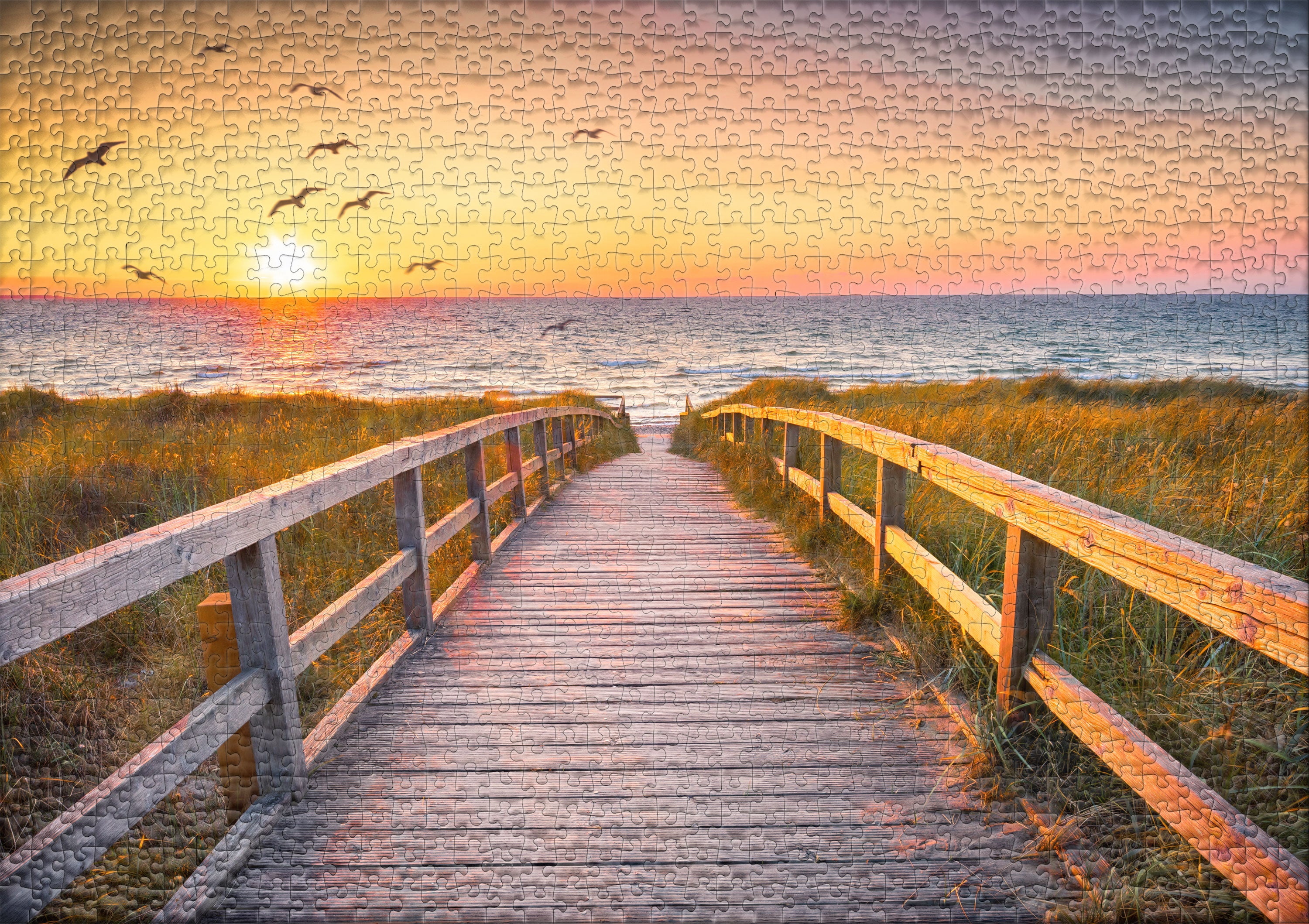
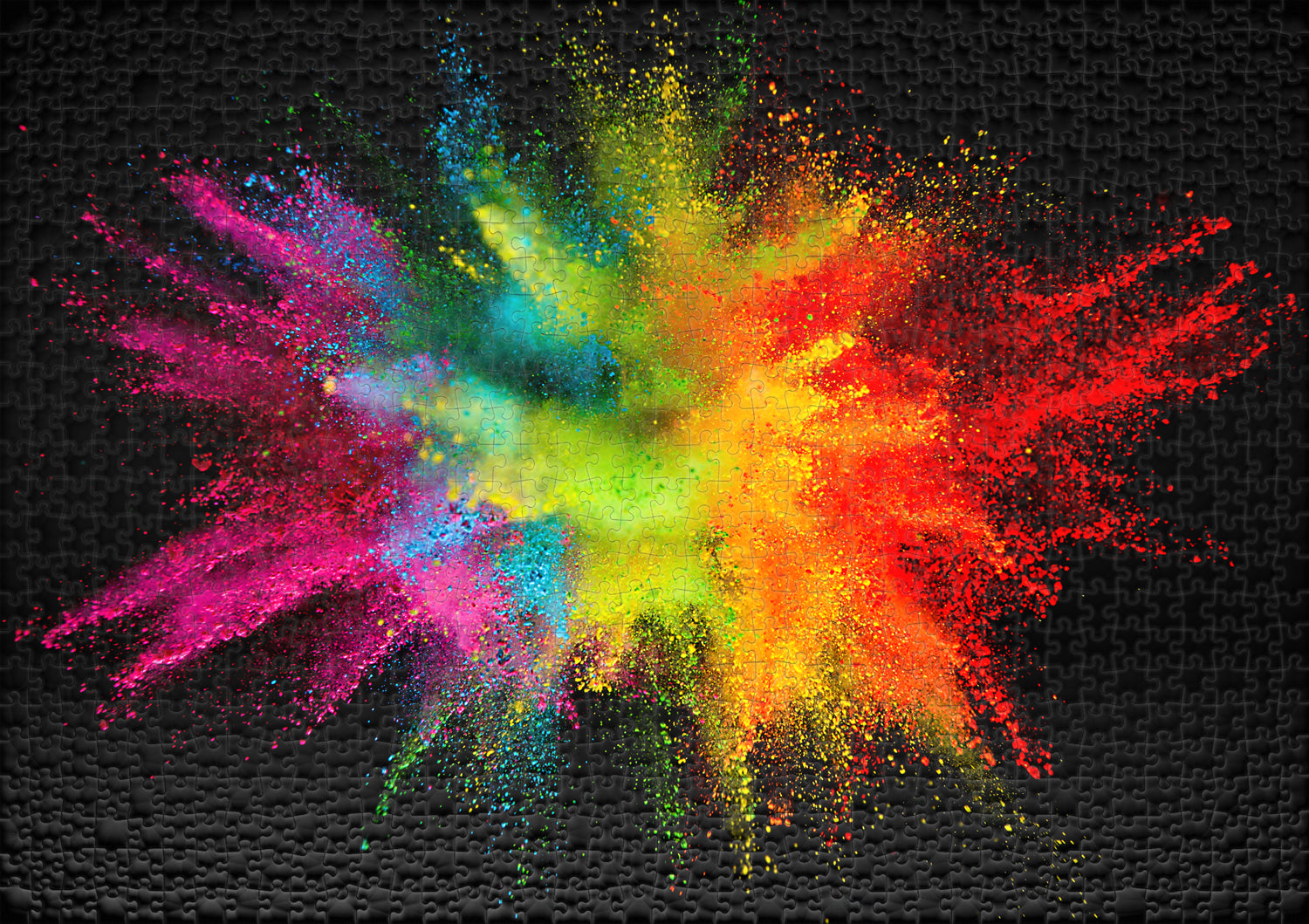
If the idea appeals to you, you can look at various motifs – from mandalas to nature and symbolic images to calm, minimalist designs.
What matters less is the "perfect" puzzle, but that it appeals to you and you enjoy spending time with it. As a beginner, we recommend starting with a 500-piece puzzle and then moving on to 1000 pieces or even 2000 pieces for advanced puzzlers.
Sources
- ARD/ZDF Online Study: Media Usage in Germany
https://www.ard-zdf-onlinestudie.de - Deloitte Digital Consumer Trends (Europe/Germany)
https://www2.deloitte.com - Csíkszentmihályi, Mihály: Flow – The Secret of Happiness
- Future Institute: Megatrend Mindfulness
https://www.zukunftsinstitut.de


Leave a comment